
Guatemala Monja Blanca: A Cup from the Shores of Lake Atitlán
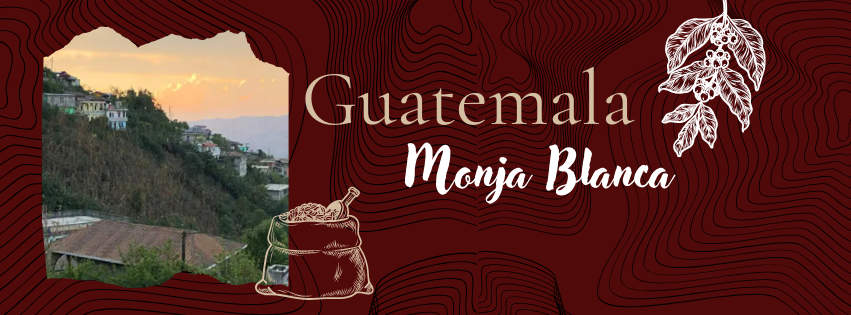
This year, Spella Caffè is delighted to welcome back Guatemala Monja Blanca—one of our community’s favorite returning offerings.
Some coffees ask only to be tasted; others invite you to follow their fragrance into the forests and foothills from which they came.
What if a cup of coffee could take you somewhere?
Into the mist above a volcanic lake, along steep green hillsides, and into the hands of the people who cultivate them. Some coffees contain more than flavor—they carry the scent of rain, the richness of volcanic earth, and the quiet drama of the landscape shaping their flavor profile.
It is a coffee that invites you to linger—not only over the cup, but over the place it comes from: the highlands of Guatemala, where volcanoes rise dramatically around Lake Atitlán, clouds gather over rolling green slopes, and coffee grows among ancient Maya communities and fields of maize.
To taste Monja Blanca is, in some small way, to travel there— rest in spirit among the land, and commune among the people and culture in your mind’s eye.

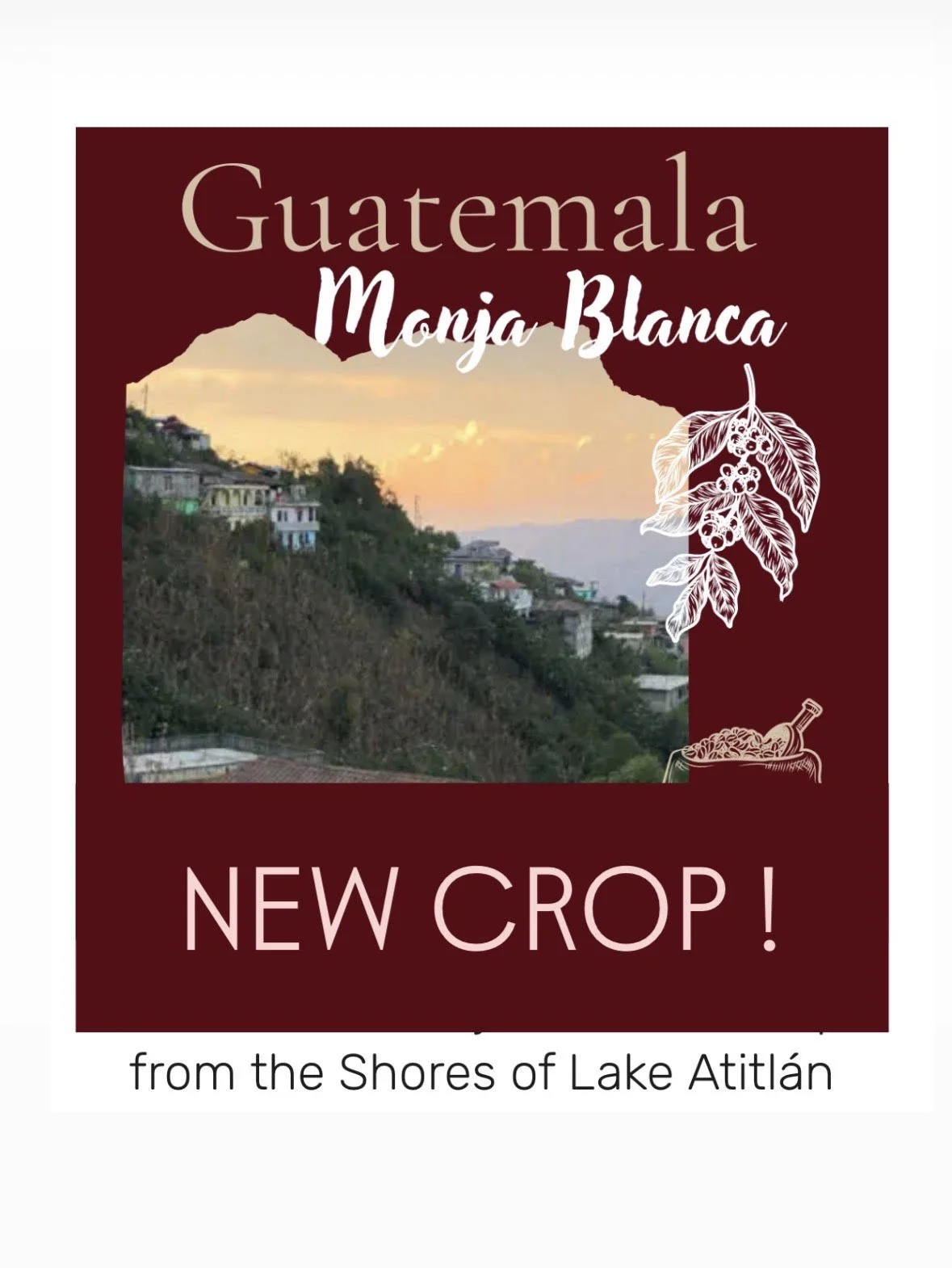
Medium Sweet Roast®.
A Cup from Atitlán
Guatemala Monja Blanca opens with lively acidity, followed by a gentle sweetness and a satisfying medium body. In the cup, we find notes of…
Italian plum, Marzipan, and Cocoa !
There is brightness, but also beautiful depth to this bean. Creamy sweetness, but also solid structure. Cocoa and stone fruit meet in the middle, creating a cup that feels lively, grounded, and ready to offer comfort in a cup.
Andrea Spella describes it as, “elegant, rich, and chewy— a coffee that fits everyone’s cup.”
Monja Blanca shines in those small, still moments of the day.
Squisito!
Region: Atitlán
Elevation: 1550 - 1650 Meters
Process: Washed
1 lb
Preparation:
We love this coffee prepared as a French press, cold brew, or as a pour over or drip coffee. She also holds her own on the stovetop in a Moka pot!
Questions about shipping and storage?FAQs here.
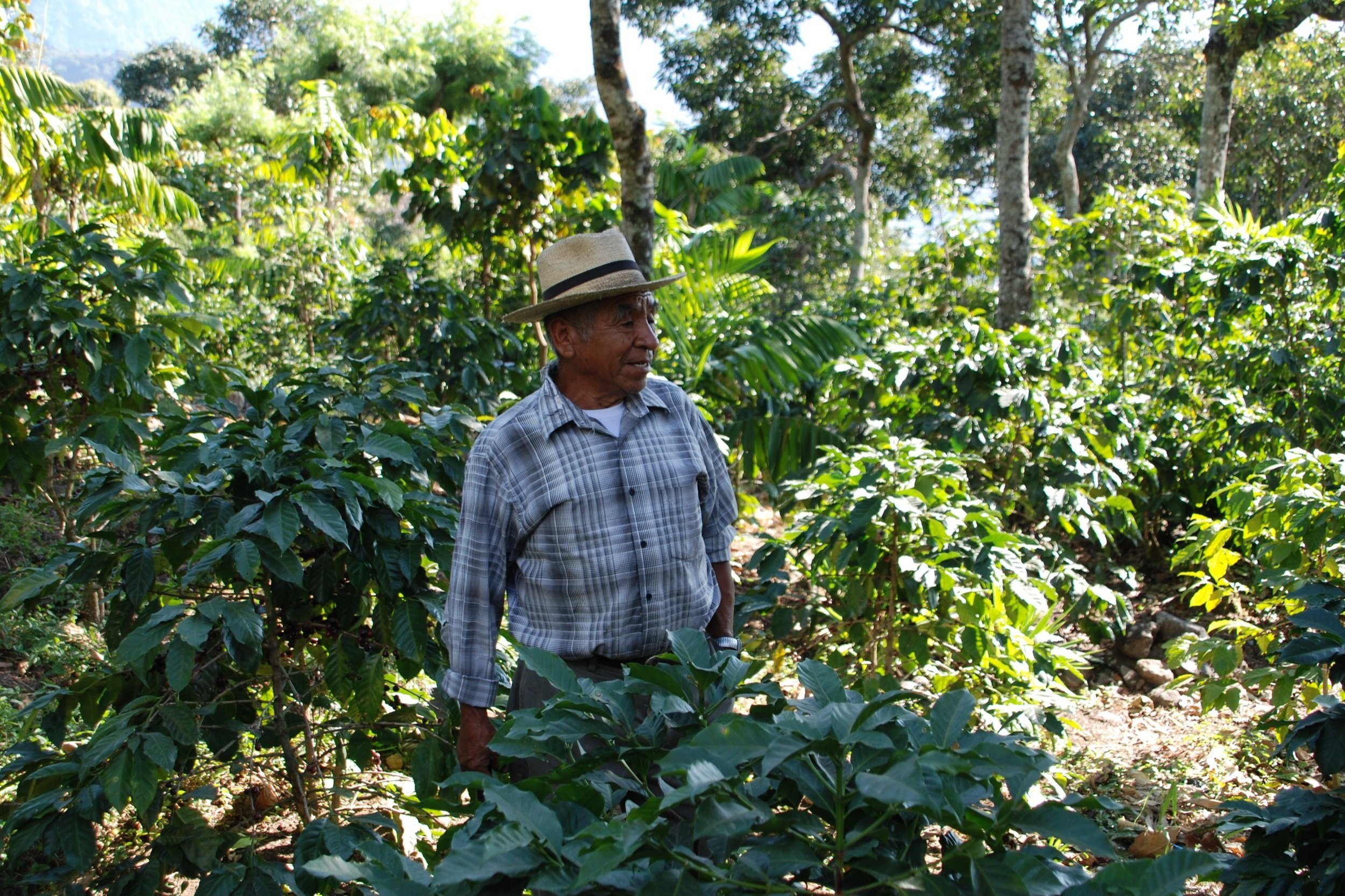
Coffee farmer from the Atitlán Region
Image Credit from De La Gente
Where the Volcanoes Meet the Lake
In Guatemala’s Atitlán region, coffee farms climb the steep volcanic slopes surrounding Lake Atitlán, growing between roughly 1,550 and 1,650 meters above sea level. Three great volcanoes—San Pedro, Tolimán, and Atitlán—stand majestic around the lake, their slopes folding into a landscape of coffee, cornfields, forests, and vibrant villages.
The mornings here can feel almost suspended in the mist. Forests disappear into fog.
Rain moves across the mountains like clockwork.
Winds sweep over the lake and arrive at the shore as cool, comforting breezes.
Between the rainy seasons and the brilliant stretches of sun, the region’s temperate climate creates an extraordinary environment for coffee cultivation.
It is a landscape shaped by water and fire: the volcanic soils beneath the coffee trees, the vast lake at their feet, and the mountains rising all around.
And everywhere, life is layered into the hillsides.
Coffee grows alongside vegetables and maize. Fishing and tourism contribute to the local economy.
Small farms dot the slopes, tended by families whose work is deeply connected to the land and to the community.
A Floral Name Full of Meaning
The name Monja Blanca means “white nun,” a reference to Guatemala’s national flower, the white orchid Lycaste skinneri. Named the country’s national flower in 1934, the orchid has long been associated with peace, beauty, and art.
Look closely at the flower and its name begins to make sense: its delicate form resembles a figure bending forward in prayer. The orchid is itself a patient creature.
It can take as long as fifteen years before it flowers, blooming only from December through February.
There is something fitting about a coffee carrying the name of such a flower. Like the orchid, Monja Blanca reflects a particular place and the patience required to cultivate something beautiful there.
The coffee is not a single-note expression of Guatemala, but a gathering of regional varieties and growers, brought together through careful selection and processing.
And, like it’s namesake, it rewards attention.
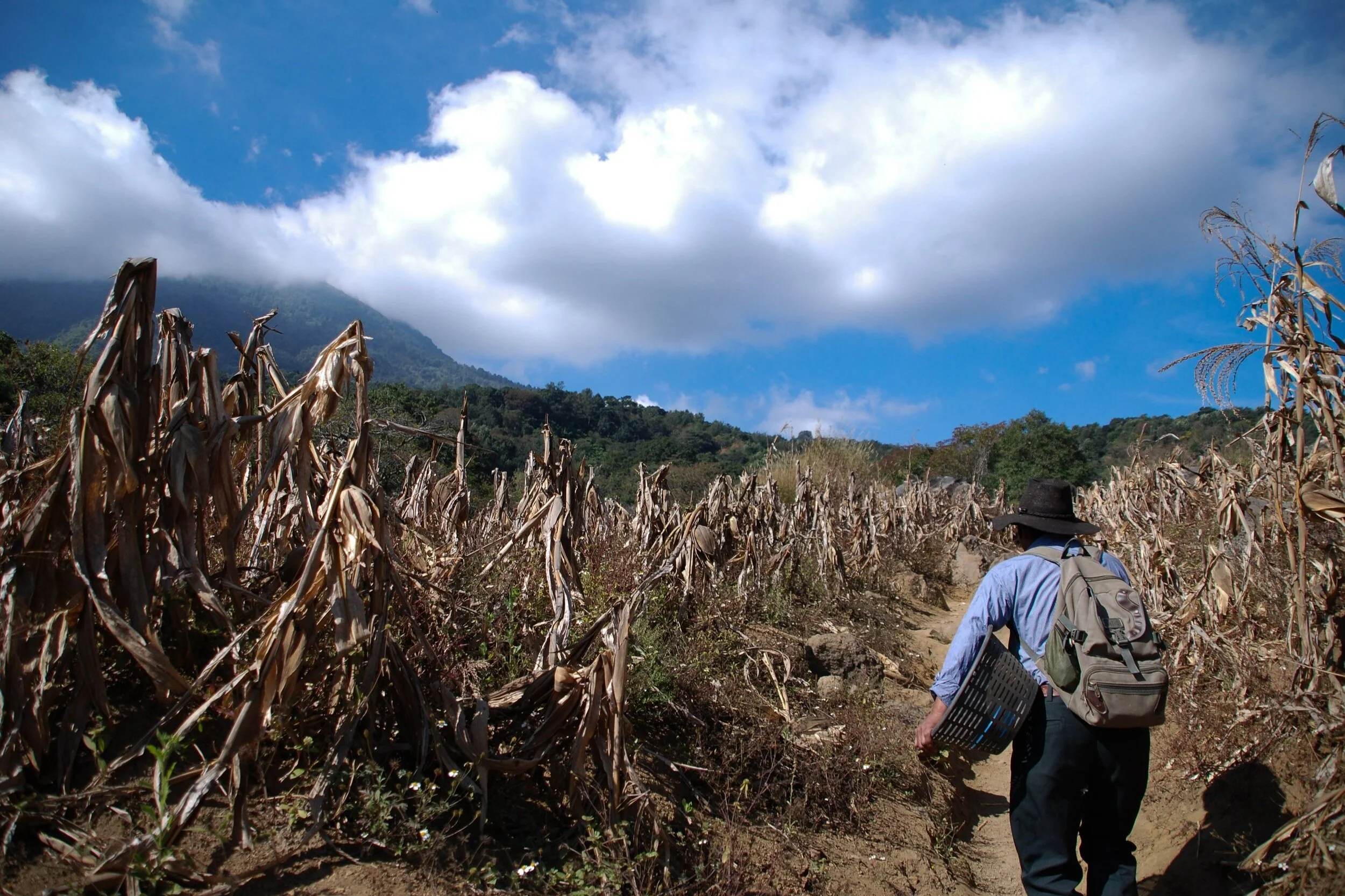
Walking through corn fields in the Atitlán Region with Volcano Toliman visible
Image Credit from De La Gente
A Cup with the Landscape Inside It
Monja Blanca opens with lively acidity, followed by a gentle sweetness and a satisfying medium body.
In the cup, we find notes of Italian plum, Marzipan, and Cocoa —juicy stone fruit brightness softened by the warmth of creamy sweetness and chocolate.
Andrea Spella describes it as, “elegant, rich, and chewy— a coffee that fits everyone’s cup.”
We think of it as an egalitarian brew: warm, welcoming, generous, and equally at home beside a quiet breakfast as it is after a long meal or alongside dessert.
There is something wonderfully familiar about a coffee like this. It doesn’t demand a special occasion. It simply makes an ordinary moment feel like time-slowing bliss.
Pour it into a mug on a slow morning. Drink it while the house is still quiet. Let the sweetness linger after breakfast. Savor it in the afternoon when the light begins to soften.
Monja Blanca shines in those small, still moments of the day.
Coffee from Many Small Farms
The story of Monja Blanca is also a story of collaboration. The coffee is produced by smallholder farms throughout the Atitlán region, bringing together several traditional Guatemalan varieties, including Bourbon, Caturra, Villa Sarchi, Typica, and Catuai.
The coffees are wet milled by Granos del Sur and Beneficio Santiago La Laguna, owned by the highly respected Juan Francisco Pira. Juan Francisco takes particular pride in working with regional farms, selecting high-quality coffees and providing additional economic incentives to farmers whose coffees are chosen for the Monja Blanca blend.
What reaches your cup, then, is more than a collection of beans. It is the result of many hands and many farms, gathered from the hills around a single remarkable lake.
It is a regional portrait assembled one harvest at a time.
The Character of Atitlán
To understand Monja Blanca, it helps to imagine the geography that shaped it. Lake Atitlán rests in a highland basin surrounded by volcanic peaks.
The region’s winters can fall to around 48°F, while summer temperatures may reach the low 80s. Rain and humidity move through the landscape, feeding forests and farms.
Mist settles over the mountains, sometimes concealing entire hillsides before lifting again to reveal the volcanoes.
The coffee plants adapted to thrive within this natural regional rhythm for generations.
They grow on steep slopes at altitude, rooted in mineral-rich volcanic soils and surrounded by the vegetation of a remarkably fertile region.
Below them, the lake changes with the weather and the light.
Above them, the volcanoes shape the horizon.
Perhaps that is why this coffee feels so balanced.
There is brightness, but also depth. Creamy sweetness, but also solid structure. Cocoa and stone fruit meet in the middle, creating a cup that feels lively, grounded, and ready to comfort.
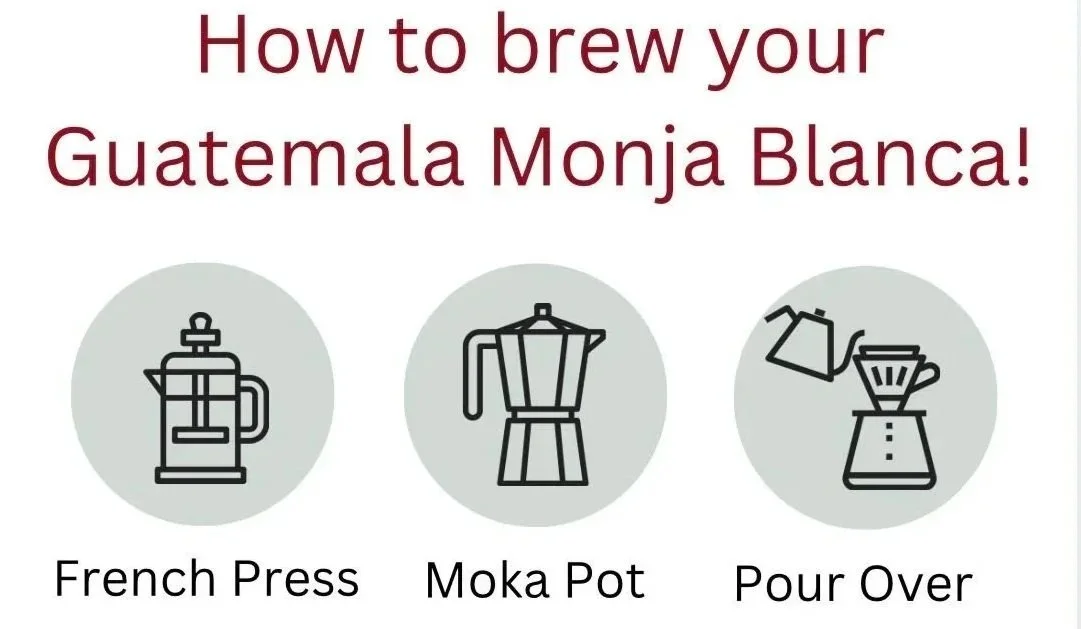
Monja Blanca is wonderfully versatile, but we especially love it prepared as a pour over, Moka Pot, or French Press.
Each method reveals a different part of its character: the clarity of the fruit, the richness of the browned sugar, the comforting depth of cocoa.
However you brew it, we hope you take a moment to let the coffee tell you where it comes from.
Imagine the volcanoes standing tall around the lake.
The lush, emerald-green hillsides, alive with the rhythm of the land. The maize fields dancing playfully in the breeze.
Mist rising from the forest floor, only to return to the land as rain.
Imagine the smallholder farmers who tend their coffee among the communities of Atitlán—working in rhythm with the land, the seasons, and the elements.
Prepare your mind.
Then, take a sip.
And let your mind, body, and soul savor the moment—a brief, immersive experience of Atitlán, captured in a cup.
A Guatemalan Cup to Savor
Guatemala Monja Blanca has become a favorite at Spella for good reason. It is a coffee with enough brightness to wake up the palate, enough sweetness to invite another sip, and enough body to make the cup feel complete.
But perhaps what makes it most special is the sense of place it carries. From the slopes above Lake Atitlán to the farmers who cultivate its coffee, from volcanic earth to the flower that lends it its name, Monja Blanca brings a remarkable region into focus.
We hope you’ll savor this year’s crop—and perhaps share it with someone you love.
Guatemala Monja Blanca is available at Spella’s Flagship Caffè and through this website’s online shop.
Come enjoy a cup with us, or take some home and let the landscape of Atitlán find its way into your own morning ritual.